


Local Groundwater Awareness
Consider wet-season groundwater and runoff before treating a recurring backup as a full-tank problem.
Lakeland Septic Services provides septic tank and drain field services in Lakeland, FL. Our team handles septic tank pumping, cleaning, inspections, repairs, installation and replacement for homes and businesses. We also handle drain field inspections, repairs and replacement, plus emergency pumping requests.
Our work starts with the actual tank, the house it serves and the soil receiving its wastewater. Lakeland averages about 57 inches of rain a year, with summer normal highs around 92°F. Wet-season groundwater, clogged filters and overloaded fields can turn an occasional slow drain into a recurring backup. Expected service life depends on the installed product, site conditions and maintenance.
Consider wet-season groundwater and runoff before treating a recurring backup as a full-tank problem.
Use bedrooms, building area and the installed permit record to understand system capacity.
Identify the application, site evaluation and approval needed for the actual work.
Separate a clogged filter or failed pump from a disposal area that cannot accept wastewater.
Explain the starting price, access requirements and work included before service.
Connect today's findings with water use, pumping intervals and field protection.
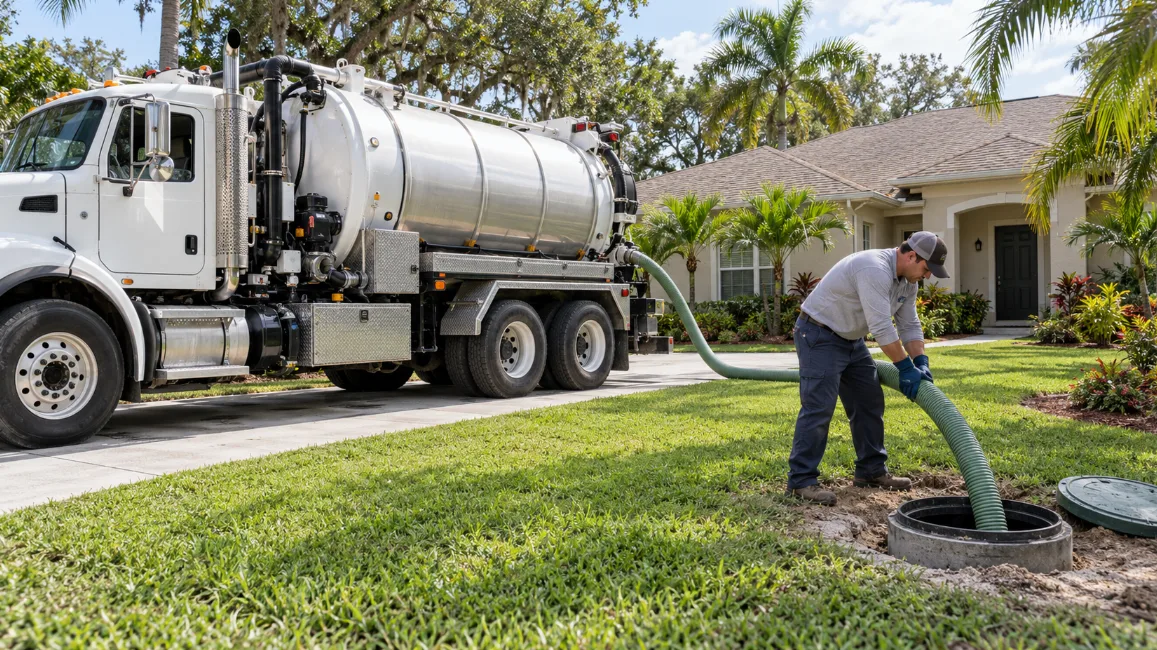
Routine care, a recurring backup or a new system: each starts with a clear scope and the property’s actual needs.
Pumping removes accumulated sludge and floating waste before solids escape into the drain field. Lakeland homes may have 900- to 1,500-gallon residential tanks; confirm the installed size from the permit record. A tank that refills quickly after service may have a field, outlet or groundwater problem.
Explore Septic ServiceCleaning targets deposits left after bulk waste removal. We explain the difference between a standard wash-down and a deeper cleaning scope, including whether pumping and disposal are included. Concrete, fiberglass and polyethylene tanks need suitable cleaning methods.
Explore Septic ServiceAn inspection reviews accessible tank components, waste levels, records and signs of field trouble. Lakeland home additions, property purchases and recurring wet-season problems deserve a clearly defined inspection scope. A private condition assessment does not replace county permitting.
Explore Septic ServiceA damaged lid, tee, filter, connection or dosing component may be repairable without replacing the entire system. Structural damage and recurring field failure require a different assessment. We identify the cause, the repair scope and any DOH-Polk approval needed.
Explore Septic ServiceNew installation and replacement in Lakeland depend on the house, usable soil, seasonal high groundwater and sewer availability. Florida sizes residential systems using bedrooms and building area. Submit the required plans and site evaluation to DOH-Polk before construction.
Explore Septic ServiceBackups, surfacing sewage and high-water alarms need prompt assessment. Reduce water use and keep people away from wastewater. We review whether pumping is safe and useful, especially after Lakeland's heavy summer rain. Emergency availability is confirmed for the request.
Explore Septic Service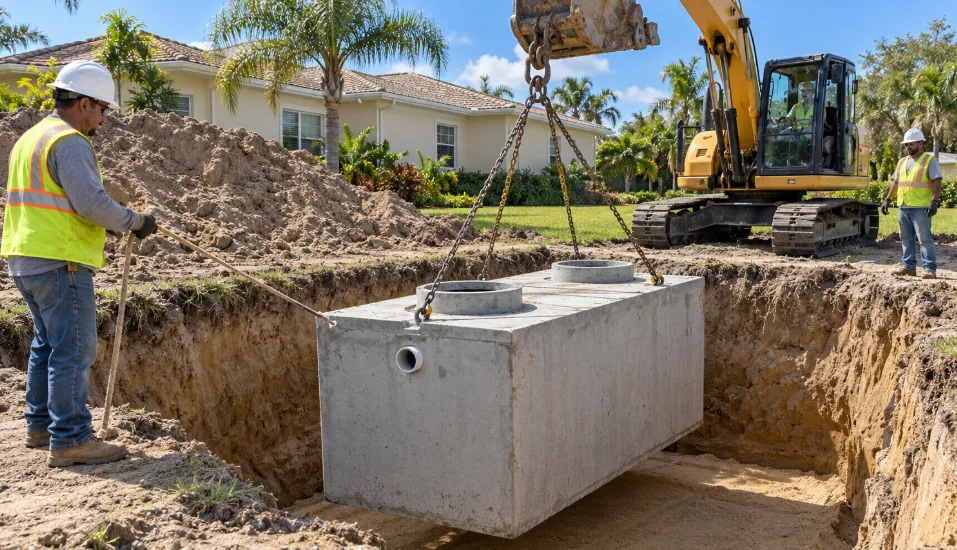
A tank can be sound while the field struggles. Review distribution, soil and groundwater before deciding on repair or replacement.
Repair starts with the distribution system and the soil receiving the wastewater. A damaged pipe, blocked distribution box and saturated field need different responses. Lakeland rainfall and seasonal groundwater belong in the assessment before choosing excavation, aeration or replacement.
Explore Drain Field ServiceA field inspection reviews signs of poor absorption, accessible distribution parts, records and site changes. In Lakeland, storm timing and seasonal water levels help explain repeat backups. We define what can be inspected and what additional testing may be needed.
Explore Drain Field ServiceReplacement needs enough suitable receiving area, the right elevation and DOH-Polk approval. Lakeland properties can face seasonal groundwater, nearby wells or lakes, and yard changes that limit options. Review the whole layout and sewer availability before selecting a new field.
Explore Drain Field ServiceLakeland–Winter Haven metro, July 2026
1,201–2,250 sq. ft.; minimum effective storage
NOAA Lakeland 2, 1991–2020
A roughly 1,800-square-foot home helps put the sizing rules in context. The July 2026 listing median is a metro-market benchmark, not the average of every home or a septic-only measurement. For an individual property, bedrooms, building area, soil and seasonal groundwater determine the design.
For example, a three-bedroom, two-bath home around 1,800 square feet fits a 300-gallon-per-day design flow with 900 gallons of minimum effective tank storage. A larger home can require more even with the same number of bedrooms. Check the installed permit record before planning a pump-out or replacement.
Realtor.com home-size data via FRED · Florida sizing tables · NOAA climate normals
Overdue pumping lets sludge and floating waste build up. Escaped solids can clog the field.
Running toilets, leaks and back-to-back laundry loads can overwhelm the system’s capacity.
Grease and wipes obstruct flow. Harsh chemicals can disrupt treatment and harm the system.
Saturated ground leaves too little space for wastewater to drain and receive soil treatment.
Roots can enter openings. Vehicles crush components or compact soil. Broken fittings also disrupt flow.
Deteriorated or undersized systems struggle. On advanced systems, missed pump and aerator care can interrupt treatment.
A septic system is more than a tank. Its storage capacity, treatment process and drain field each do a different job. Use this guide to understand home size, tank materials, expected lifespan and Lakeland conditions before choosing a service.
Realtor.com's FRED series reports a 1,807-square-foot median listed home for the Lakeland–Winter Haven metro in July 2026. It is a useful roughly 1,800-square-foot benchmark, not a measurement of all Lakeland homes or septic-only properties.
A three-bedroom, two-bath home around that size is a practical planning example. Bathrooms alone do not set Florida's tank capacity: the bedroom count and building area both matter. For an addition, compare the proposed floor plan with the approved septic record before choosing equipment.
Residential tanks in the 900- to 1,500-gallon range are useful capacity examples to discuss with a contractor. The actual installed tank may differ. Florida's tables calculate daily sewage flow first, then minimum effective tank storage.
| Matched home example | Design sewage flow | Minimum effective tank storage |
|---|---|---|
| 2 bedrooms, 751–1,200 sq. ft. | 200 gallons/day | 900 gallons |
| 3 bedrooms, 1,201–2,250 sq. ft. | 300 gallons/day | 900 gallons |
| 4 bedrooms, 2,251–3,300 sq. ft. | 400 gallons/day | 1,050 gallons |
| Higher design flow of 401–500 gallons/day | 401–500 gallons/day | 1,200 gallons |
If bedrooms and square footage fall in different rows, use the criterion producing the greater flow. For example, a two-bedroom 1,800-square-foot house still falls into the 300-gallon-per-day area example. A three-bedroom house at 2,600 square feet reaches the 400-gallon-per-day area example, with 1,050 gallons of minimum effective storage.
Tank gallons are storage; gallons per day describe design flow. Neither is the drain field's square footage. Field area also depends on the receiving soil and approved layout. Read the existing permit rather than assuming a three-bedroom home always has the same tank.
Heavy and rigid, with lifting access required. Check lids, seams and walls for deterioration. The correct base matters, and even a heavy tank can be affected by high groundwater when emptied.
A lighter composite shell that needs correct bedding, backfill and support. Inspect fittings and shell condition, and follow the approved model's groundwater and anchoring instructions.
A molded plastic shell with model-specific burial and installation limits. Incorrect backfill, depth or support can cause deformation. Use a Florida-approved model suitable for the site.
The shell, drain field and mechanical equipment age differently. Installation, materials, wastewater loading, groundwater and care all affect service life. Assess condition and performance instead of assuming every part expires at one fixed age.
A conventional system sends settled wastewater to a soil absorption field. Approved chamber or aggregate designs, dosed fields and more advanced treatment have different installation and maintenance needs. Fiberglass is a tank material; aerobic describes a treatment process.
In Lakeland, confirm the soil profile, seasonal high water, usable land and any address-specific water-quality requirements. A wet or low-lying site may need fill or a raised field. Do not assume every Polk County property needs advanced treatment, or that sandy surface soil guarantees a standard system will fit.
The Florida Department of Health in Polk County evaluates and permits new and repaired septic systems locally. DEP oversees the state program; its reviewed transition list still directs Polk applicants to the county health department. City or county building, land-use and utility approvals are separate.
DOH-Polk lists its Bartow Environmental Public Health office and 863-519-8330 for septic inspection information. This is the county office's number, not our company phone.
The plan needs the system layout and relevant boundaries, structures, wells, water features and utilities. A quick drainage test alone does not establish whether a system will fit. The evaluated soil profile and seasonal high groundwater help determine the design.
Ask the serving utility whether connection is available or required before paying for a new tank or field design. A Lakeland mailing address does not by itself establish city limits or the serving utility. Check the parcel and proposed scope.
Lakeland's building checklist requires approved health-department septic documentation when additional living space is built on a septic-served property. A spare-room conversion, addition, pool or driveway can affect demand, setbacks or available field area.
DOH-Polk's reviewed program page does not publish a fixed standard permit turnaround. Ask for the current queue and site-evaluation availability before setting the construction date. Document corrections, engineering, site conditions and separate building approvals can add time.
Florida Statutes section 120.60 generally gives an agency 30 days to notify an applicant of deficiencies and 90 days after a complete application for a decision, unless a shorter law applies. These are administrative review rules, not a typical installation duration.
Rule 62-6.015 directs the department to make every effort to issue a repair permit within two working days after receiving the repair application. That effort target does not guarantee approval, an inspection slot or a contractor visit within two days.
Obtain the applicable permit before construction or regulated repair. Coordinate inspection stages before covering components and retain final approval and system records. Routine pumping, like-kind component servicing and system alteration have different scopes; confirm the permit requirement for the work being proposed.
DOH-Polk septic program · DEP application requirements · Lakeland building checklist · Section 120.60 timing · Repair rule
NOAA's Lakeland 2 station reports 56.82 inches per year in its 1991–2020 normals. June through September totals about 34.24 inches; July's normal daily high is 92.1°F. These are long-term climate normals, not a forecast or this year's rainfall.
A field needs unsaturated soil to receive and treat wastewater. Several wet days can expose a marginal field, poor drainage or excessive household flow. Heat by itself does not establish septic failure. Describe whether symptoms follow rain, heavy laundry use or a pump alarm.
Soil and groundwater conditions vary from one property to another. Review the actual field area, nearby wells and water features instead of assigning one soil condition to all of Lakeland. Keep traffic and paving off the field and preserve the land needed for future work.
Reduce water use, stay away from surfacing sewage and get the site assessed before pumping. An emptied tank can move under groundwater pressure. A pump-out does not remove groundwater from around the field.
NOAA Lakeland 2 climate normals · EPA flooded-system guidance
Research reviewed October 26, 2026. Housing benchmark: July 2026 listed homes in the metro. Climate: 1991–2020 normals. The approved design and current county requirements govern work at your address.
Florida's tables use bedrooms and building area, with the more demanding criterion controlling. A matched three-bedroom home of 1,201–2,250 square feet has a 300-gallon-per-day design flow and 900-gallon minimum effective tank capacity. A matched four-bedroom home of 2,251–3,300 square feet has 400 gallons per day and 1,050 gallons of storage. Existing tanks may be larger.
The Realtor.com series published through FRED reports a 1,807-square-foot median for listed homes in the Lakeland–Winter Haven metro in July 2026. That is a listing-market benchmark, not an average of all homes or a measurement of septic-served houses.
The Florida Department of Health in Polk County remains the local septic permitting contact under DEP's reviewed county transition list. City or county building approvals and utility sewer decisions are separate.
Prepare DEP4015 application and site plan, the building floor plan, a qualified site evaluation and applicable fees. The property and proposed system must meet the required design, setbacks, groundwater separation and any address-specific treatment conditions.
Confirm DOH-Polk's current queue. Florida's repair rule sets an effort target of two working days after a repair application. For ordinary licensing review, section 120.60 provides 30 days to notify deficiencies and generally 90 days from a complete application for a decision unless a shorter law applies. These are not installation promises.
A qualified evaluator reviews soil, seasonal high groundwater, topography and the area available for the system. The county uses that information with the house plans to determine the construction requirements.
Lakeland's June–September normal rainfall totals about 34 inches. Wet soil and higher groundwater can reduce the field's ability to receive wastewater. Check filters, pumps and plumbing too; weather alone does not establish the cause.
Have the conditions assessed first. Groundwater can lift an emptied tank, and pumping does not dry the surrounding soil.
Many household tanks need pumping every three to five years, adjusted to occupancy, capacity and measured solids. Advanced treatment and dosing equipment have additional maintenance requirements.